Architectural shingles are the stronger long-term pick for many Pennsylvania homeowners, but three-tab shingles still make sense in some situations. The right answer depends on the exact product you buy and on your own priorities. Budget, looks, and wind coverage often pull homeowners in different directions. The architectural shingles vs 3-tab question comes down to how each shingle is built and how it looks, plus how it handles wind and what it costs upfront. This guide covers each point with Central Pennsylvania homes in mind. By the end, you’ll know what to ask when you compare estimates.
What Separates Architectural Shingles From Three-Tab Shingles?
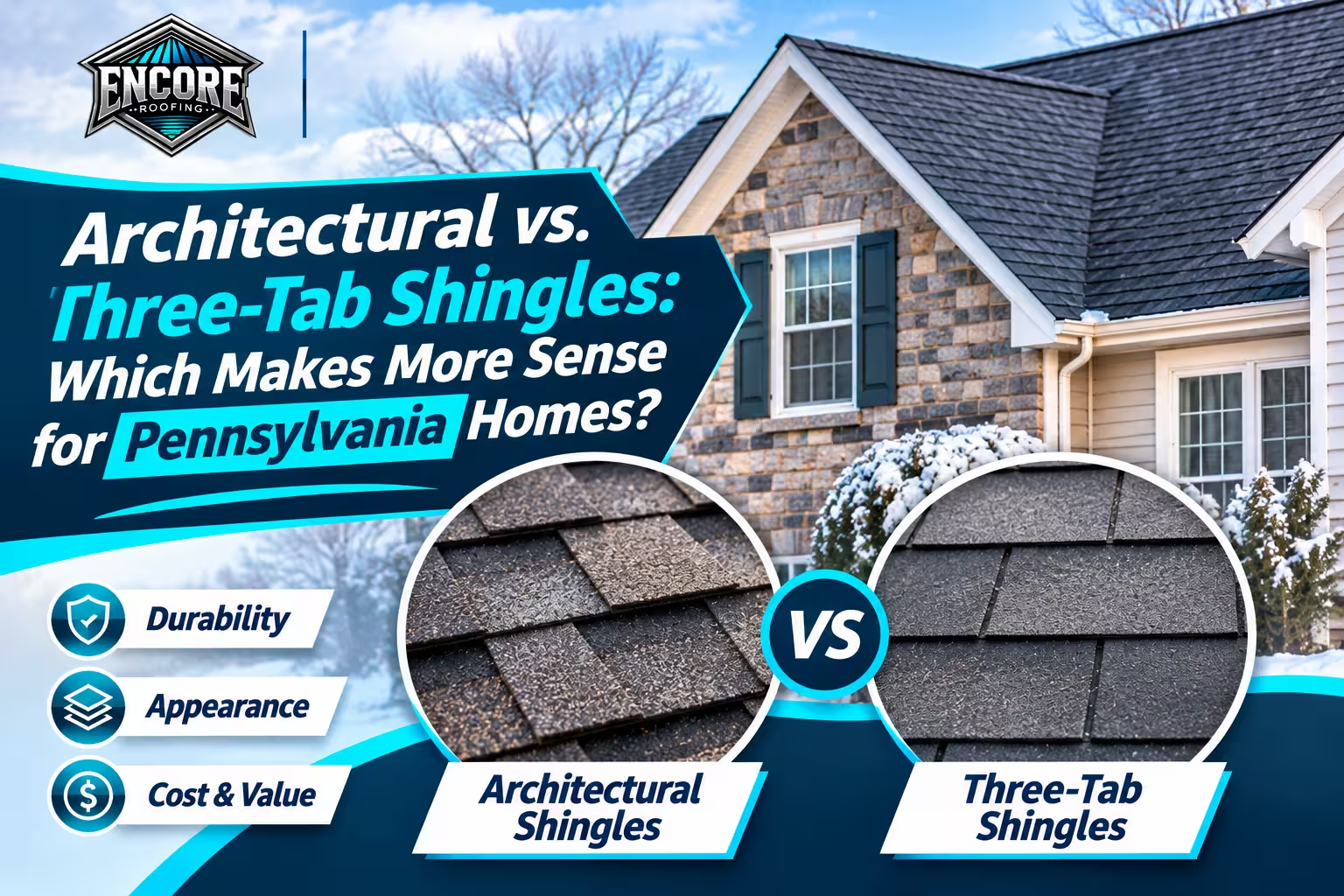
Both types are asphalt shingles built from a fiberglass mat, asphalt, and colored granules. The difference lies in how manufacturers assemble those materials and how the finished roof looks from the street.
How Three-Tab Shingles Are Constructed
A three-tab shingle is one flat layer with two slots cut into its bottom edge. Those slots split the exposed face into three equal tabs that line up in tidy rows across the roof. GAF Royal Sovereign is a well-known example of these traditional asphalt roof shingles.
Plenty of homeowners still choose three-tab on purpose, since it usually costs less upfront and matches many older roofs. It can also suit a detached garage or a house you plan to sell soon.
How Architectural Shingles Create a Dimensional Profile
Laminated asphalt roofing shingles stack a full base layer under a top layer cut into tabs of uneven widths. The factory bonds those layers together, so each shingle arrives as one thicker piece. GAF Timberline HDZ and Owens Corning Duration both belong to this architectural category.
Those uneven tabs cast shadow lines that give the roof a dimensional appearance, and many dimensional shingle roof options mimic wood shake or slate. The extra layer adds shingle thickness, though thickness alone doesn’t predict performance.
Here’s a quick side-by-side view of the two types:
| Comparison factor | Three-tab shingles | Architectural shingles |
| Construction | Single-layer design | Laminated, layered construction |
| Appearance | Traditional and relatively flat | Dimensional and textured |
| Thickness | Generally thinner | Generally thicker |
| Wind performance | Depends on the specific product | Depends on the specific product |
| Warranty | Varies by manufacturer and product | Varies by manufacturer and product |
| Upfront material cost | Often a lower-cost option | Often a higher-cost option |
How Do the Two Shingle Types Compare in Durability and Wind Resistance?
Laminated asphalt construction gives architectural shingles some natural advantages, but the category label tells only part of the story. Among wind-resistant roof shingles, two products in the same category can carry very different ratings, so a fair roof shingle durability comparison starts with manufacturer specifications.
Shingle Thickness, Layering, and Everyday Durability
A laminated shingle’s extra asphalt and mat can help it handle years of sun and freeze-thaw swings, though that alone doesn’t guarantee a longer life. Product lifespan also depends on the asphalt blend, attic ventilation, roof slope, and workmanship. No one can honestly assign a single lifespan to every shingle in either category, so the warranty term and its conditions give you a more reliable comparison.
Wind Resistance and Warranty Differences
Manufacturers often test wind performance under ASTM D7158, a standard that measures how well sealed shingles resist uplift. Shingles receive Class D, G, or H ratings, with H at the top. A class rating describes lab performance under set conditions and doesn’t promise that a roof will survive every real storm.
Test results and warranties can tell different stories. GAF lists its Royal Sovereign three-tab shingle as Class H, yet its wind warranty covers speeds only up to 60 mph. Owens Corning backs its Duration architectural shingles with a 130-mph wind resistance limited warranty. GAF’s architectural Timberline HDZ qualifies for a 15-year WindProven limited wind warranty with no maximum wind speed limit when the roofer uses the required GAF accessories.
Fastening requirements and accessories decide whether that higher coverage applies. Without GAF’s special installation method, standard Timberline wind coverage tops out at 110 mph. A wind warranty also isn’t storm insurance. It covers only what the manufacturer agrees to repair or replace after a covered failure, and only under its written conditions.
Which Option Offers the Better Appearance for Pennsylvania Homes?
Appearance is usually the first difference homeowners notice. Three-tab roofs read as flat and orderly from the curb, while architectural roofs show texture and shifting shadow. Neither look is wrong, and the better choice depends on the house underneath.
The clean rows of three-tab suits a simple ranch house or an outbuilding that must match an existing roof. Color carries more weight with a traditional flat shingle appearance because no shadow pattern breaks up the surface.
An architectural profile tends to stand out on steep roofs and on homes with dormers or several roof planes. Plenty of older Pennsylvania homes once wore slate or wood, and some owners like how a dimensional shingle hints at that texture. Others prefer three-tab for its modest, period-friendly line. In a historic district, check local review rules before you commit.
What Should Homeowners Compare Before Choosing a Shingle?
Ask your contractor for the spec sheet and warranty document for each shingle on your estimate, then compare them using the points below.
Roof Slope and Installation Requirements
Every asphalt shingle lists a minimum roof slope in its installation instructions, and low-pitched sections may need extra underlayment or a different material.
Fastening requirements vary by product. One shingle may need four nails for standard coverage, while another needs six nails and a specific starter strip for a higher wind rating. Your installer should follow the manufacturer’s written instructions for the exact shingle you choose, since shortcuts can affect performance and warranty eligibility.
Warranty, Algae Resistance, and Product Lifespan
“Lifetime” on a shingle wrapper rarely means forever, so read the actual warranty document. GAF ties its lifetime coverage strictly to the original owner of a single-family home, as transferring the warranty to a second owner converts it to a limited-year term rather than lifetime. Full non-prorated coverage lasts 10 years on Timberline shingles and 5 years on Royal Sovereign, which carries a 25-year term. After that window, the manufacturer’s share of a claim shrinks.
Algae resistance matters on shaded, damp roof slopes where dark streaks tend to appear. GAF lists 10 years of algae coverage on Royal Sovereign, while some Timberline shingles carry longer terms depending on their label. Three-tab usually wins on upfront material cost. Weigh that savings against the warranty term and wind coverage, since the cheapest bundle isn’t always the cheapest roof over time.
Can Architectural Shingles Replace Existing Three-Tab Shingles?
Yes, and it’s a common upgrade when an old three-tab roof wears out. Both are asphalt shingles, so the switch doesn’t call for a different roofing system, but your roof’s current condition still shapes the job.
Before you narrow down shingle replacement options, a roofer should check the deck for soft spots, count existing layers, and confirm the slope suits the new product. Don’t assume new shingles can go straight over the old ones. Local code and manufacturer instructions limit overlays, and a flat three-tab layer underneath can make laminated shingles look uneven. A full tear-off lets the crew inspect and repair the deck before the new roof goes on.
Which Shingle Type Makes More Sense for Your Pennsylvania Home?
Your house, budget, and timeline decide the best asphalt shingle type for you.
Three-tab shingles may still be a reasonable option when:
- Your budget is tight, and you need a sound roof now.
- You’re matching an existing section or roofing an outbuilding.
- You expect to sell the home within a few years.
Architectural shingle benefits may be worth the extra cost when:
- You plan to stay long enough to use a longer warranty.
- Stronger wind warranty options matter on an exposed lot.
- You want more texture and depth from the street.
Installation quality matters either way, because a premium shingle installed carelessly can fail sooner than a basic one installed to the manufacturer’s specifications.
Frequently Asked Questions
Are architectural shingles better than three-tab shingles?
Often, but not always. Architectural shingles usually offer more dimension and stronger warranties, while three-tab shingles still fit a tight budget or a home you’ll sell soon.
Which asphalt shingles handle strong winds better?
It depends on the product. Compare each shingle’s ASTM D7158 class and written wind warranty, since some architectural lines offer far higher coverage with required accessories.
Do architectural shingles last longer than traditional shingles?
They often carry longer warranty terms, but real-world lifespan still depends on the product, your attic ventilation, and installation quality.
Are architectural shingles suitable for older Pennsylvania homes?
They can be. A dimensional profile may echo original slate or wood, though some older homes look better with flatter three-tab rows.
Can architectural shingles replace existing three-tab shingles?
Yes, after your roofer checks the deck, existing layers, and slope. Code and manufacturer rules may limit overlays, so a tear-off is often the better route.
What should homeowners check before choosing architectural shingles?
Review the wind warranty, algae coverage, and fastening requirements, then ask how long the non-prorated period lasts.
Final Thoughts
Three-tab shingles offer a flat and budget-friendly look, while architectural shingles add layered depth and often stronger warranty options. The right choice depends on your home, your priorities, and the exact product. Encore Roofing, LLC is based in Newport and brings more than 30 years of roofing experience. The team handles architectural shingle roof installation across Perry County, Harrisburg, Mechanicsburg, and nearby Central Pennsylvania communities. Reach out to compare shingles for your roof and request a free, no-obligation estimate.