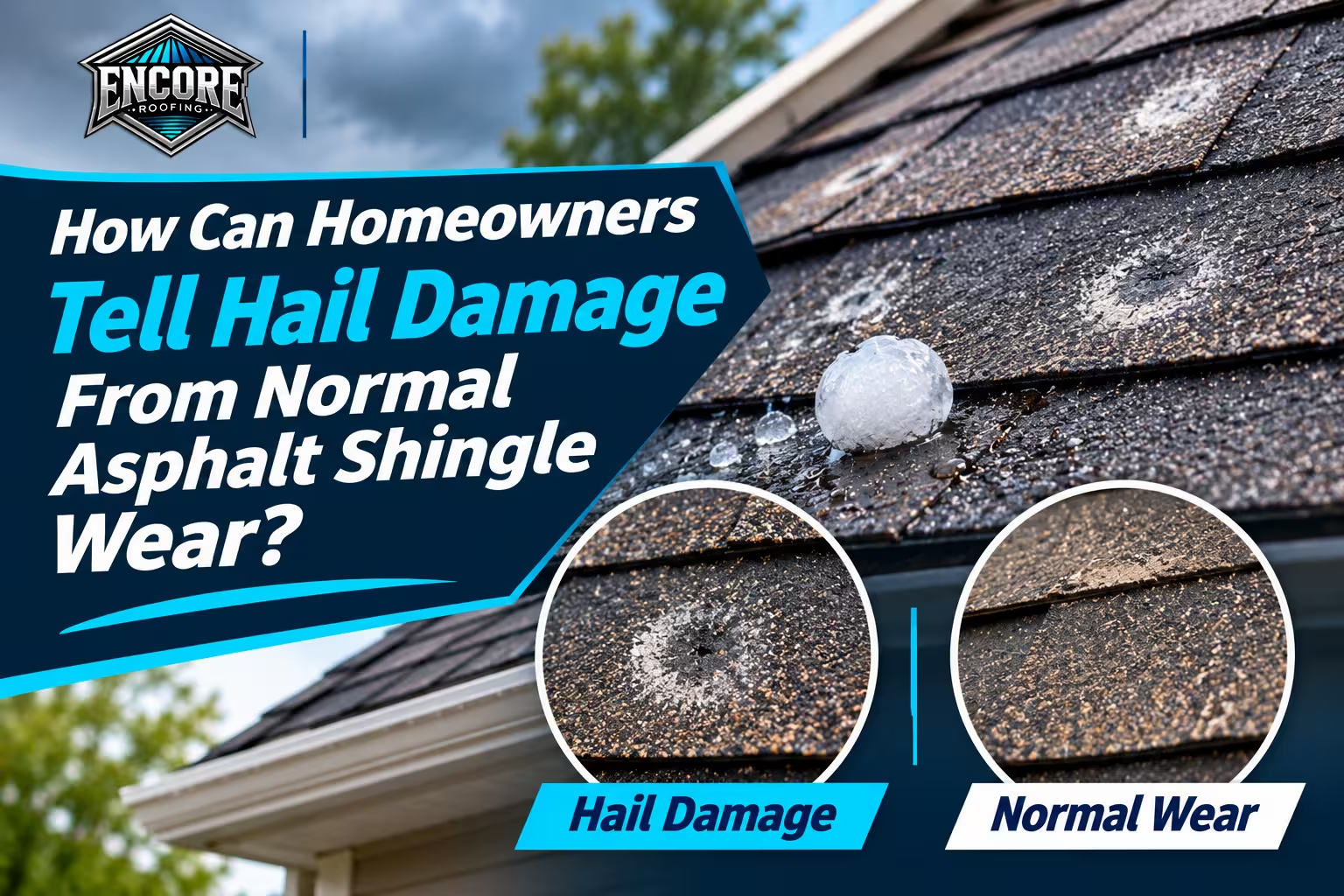
Hail usually leaves random hits on a roof, such as dark bruises, small bare patches, or cracks where a stone struck hard. Normal wear builds slowly across the whole roof after years of sun and temperature swings. That split is the starting point for judging hail damage on roof shingles, though both problems often show up side by side.
Homeowners mix the two up all the time. Granule loss and dark spots can come from hail, but age and foot traffic produce them too. Roof age and storm timing help sort it out, along with dents on nearby metal. This article covers what aging looks like, what hail leaves behind, and how to compare them.
What Does Normal Wear Look Like on Asphalt Shingles?
Asphalt shingles start breaking down the day a crew installs them. Sunlight bakes the asphalt, while summer heat and winter cold make it expand and shrink. The changes creep in slowly over many years. They usually spread across a whole slope rather than in scattered spots.
Gradual Granule Loss and Surface Changes
Those little colored stones on each shingle shield the asphalt from ultraviolet light. As shingles age, rain slowly carries some of them off. Granules collecting in gutters do not prove hail hit your house, and brand-new shingles often shed leftover manufacturing granules for months. Worry starts when bare black patches appear.
Curling, Cracking, and Other Signs of Aging
Asphalt deterioration drains the oils that keep a shingle flexible. An old shingle turns stiff and brittle, so its edges curl up or its tabs cup down. Thin cracks spread in a random web, while surface blistering leaves small popped bubbles. Years of strong sun drive these changes on roofs that no hailstorm has ever touched.
What Are the Common Signs of Hail Damage on Asphalt Shingles?
A hailstone hits a shingle hard and fast, and a big enough strike can knock granules loose or bruise the material underneath. Harder hits can crack the shingle outright. Unlike aging, this damage arrives in one storm as distinct impact points rather than slow, even wear.
Impact Bruising and Localized Granule Displacement
Impact bruising works like a bruise on fruit, where the surface looks intact, but the blow has softened the material underneath. Pressed with a thumb, a bruised spot can feel spongy. Granule displacement around the hit often leaves a dark, roughly round mark. Dark spots alone prove nothing, because algae and blistering create similar marks on sound shingles.
Shingle Mat Fractures and Exposed Asphalt
Most modern asphalt shingles have a fiberglass core called the mat that gives the shingle strength and holds its shape. A hard enough hailstone can fracture that mat. Exposed fiberglass threads or a clean break in the asphalt signal serious damage. Hail fractures usually sit at the center of an impact mark, while aging cracks spread thinly across many shingles.
Collateral Damage Around the Roof
Hail rarely hits just the shingles, and soft metal parts often pick up the clearest marks. Round dents in gutters, roof vents, and flashing can show that hail of real size came through. Location matters too, since gutter dents on the west or south side paired with bruised shingles on that same slope tell a consistent story.
How Can You Compare Hail Damage With Normal Shingle Wear?
Hail and age can both strip granules and change how a shingle looks. The symptoms overlap, so the real difference usually lives in the pattern of the damage. Hail leaves scattered, distinct hits from one event. Age leaves broad, gradual wear that tracks with sun exposure and the years. Reading that pattern is the heart of any shingle wear damage comparison.
Hail Impact Versus Gradual Asphalt Deterioration
The table below lines up what homeowners most often notice with how each sign might look under hail versus normal aging. Read it as a rough guide, not a diagnosis. Several of these signs can come from either cause, so the overall pattern matters more than any single row.
| What homeowners notice | Possible hail-related damage | Possible normal wear |
| Granule loss | Concentrated around impact areas | Gradual loss across aging surfaces |
| Dark spots | May indicate localized impact | May result from other surface conditions |
| Soft or bruised areas | Can suggest impact bruising | Not a typical sign of ordinary surface aging |
| Cracking | May involve impact-related fractures | Can develop through long-term deterioration |
| Nearby metal components | Dents may support evidence of hail exposure | Usually unrelated to gradual shingle aging |
Why One Sign Is Not Enough to Confirm Hail Damage
Granule loss on its own proves very little, since foot traffic and manufacturing variations knock granules loose just like weathering does. A 15-year-old roof can carry broad age wear plus fresh bruises from last month. That mix makes hail damage versus aging hard to judge from one photo, so weigh the whole roof before trusting a single mark.
What Other Evidence Can Help Identify Hail Damage?
The roof surface is only one place to look after a hailstorm. Plenty of evidence sits at ground level, where you can check it safely. Metal fixtures and the timeline of recent weather can fill gaps that the shingles leave open. Each clue adds weight, even when none settles the question alone.
Check for Dents and Impact Marks on Nearby Components
Walk the perimeter and check gutters, window screens, and the metal fins on your air conditioner. Fresh hail marks look like small round dents, often with chipped paint. Old dents from ladders or falling branches look duller and do not prove roof damage. Fresh dents clustered on the side facing the storm make a far stronger case.
Consider Storm Timing and Previous Roof Condition
A hail warning last Tuesday followed by new marks on Wednesday is meaningful timing. On an older roof with existing bare spots, separating old wear from new hits gets harder. Insurers such as Travelers publish general guidance on spotting hail damage after storms. Dated photos from before and after the storm give any reviewer a clear baseline.
Can Hail Damage Go Unnoticed Even Without Roof Leaks?
A dry ceiling does not mean a healthy roof. Cosmetic damage only changes how a shingle looks, while functional damage weakens its ability to shed water. A bruise that crushed the mat can stay dry for months until freeze-thaw cycles widen the break. Not every impact mark leads to a leak, so a close inspection beats guessing.
When Should Homeowners Arrange a Professional Roof Inspection?
You can spot plenty of warning signs from the ground with binoculars. Confirming impact bruising usually means touching the shingle or flexing it to check the mat. Leave that to someone trained and equipped for it. A wet roof after a storm is slick and unpredictable, and a quick look is not worth a fall.
Signs That Deserve a Closer Inspection
Book a closer look if you see localized granule loss, dark round spots, or anything resembling a cracked shingle. Fresh dents on gutters or vents after a hailstorm also justify a check. The same goes for new damage you know was not there before a recent storm, or older wear you cannot confidently pin on age.
What a Hail Damage Roof Inspection Can Establish
A hail impact roof inspection checks each slope for bruises and displaced granules, then looks at vents and flashing for matching dents. A good inspector records where each problem sits and backs it up with photos and a written report. That report describes the roof’s physical condition. It does not decide whether an insurance policy covers anything.
What Should Homeowners Do Before Filing a Hail Damage Insurance Claim?
Take dated photos of everything you can safely see and note the approximate storm date. Read your policy and call your insurance representative about their claim process. An insurance adjuster generally weighs how many impacts hit and whether they caused functional damage. A contractor’s report can support that review but cannot guarantee approval. Pennsylvania residents can find consumer guidance through the Pennsylvania Insurance Department.
Frequently Asked Questions
What does hail damage look like on asphalt shingles?
It usually shows up as scattered spots where hail knocked granules loose. Some hits leave soft bruises or shallow depressions, and harder strikes can fracture the surface or mat. Other problems look similar, so judge each mark in context.
How can I distinguish hail damage from normal roof aging?
Hail leaves random, localized impact marks from one event, while aging spreads gradually over years. A recent storm and fresh dents on gutters or vents point toward hail. When the signs are mixed, a professional inspection is the most reliable way to tell.
Does granule loss always mean the roof has hail damage?
No. Granules come off naturally as shingles age, and new shingles shed surplus granules after installation. Foot traffic and manufacturing variations cause loss too, and hail is only one possible cause. That means the pattern matters more than the granules themselves.
Final Thoughts
Hail damage arrives all at once as scattered hits and bruises, while normal wear creeps across a roof over many years. Granule loss or a few dark spots cannot settle the question alone. When a recent storm leaves you unsure, a professional look is the safest next step.
Encore Roofing, LLC provides roof inspections, storm damage inspections, and roof repairs from its home base in Newport, Pennsylvania. The team serves Perry County, Harrisburg, Mechanicsburg, and surrounding Central Pennsylvania communities. Call (717) 979-1975 to schedule an inspection and get a clear answer about your shingles.