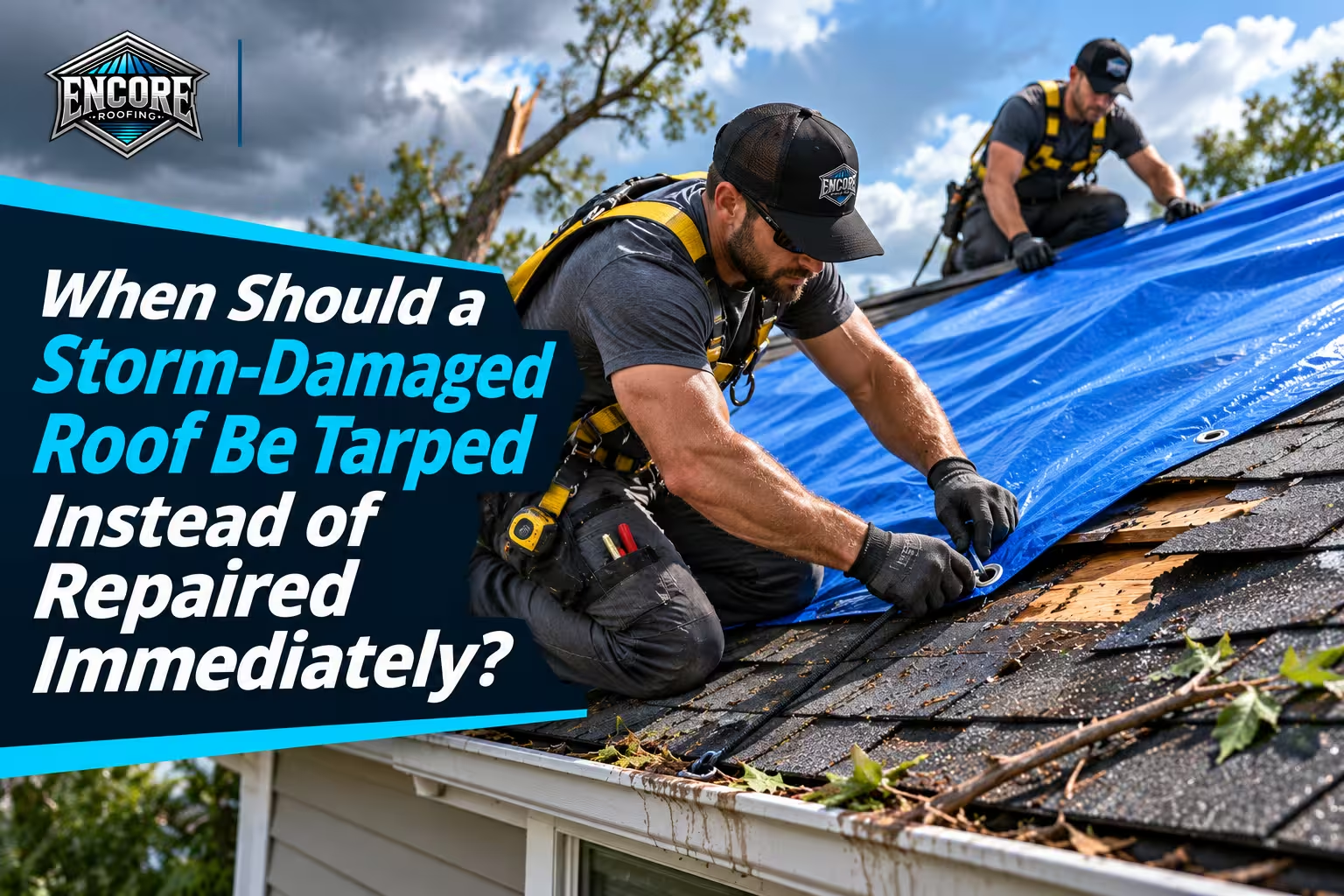
Emergency roof tarping is the right call when a storm opens up your roof, and a crew can’t safely make a permanent fix right away. Rain might still be falling, or the right materials might not be on hand yet. A tarp keeps water off the exposed area while a professional inspects the roof and plans the real repair.
Small damage is a different story. If the problem is minor and easy to reach in calm weather, a roofer can often fix it the same day. Leaving a hole uncovered rarely ends well, because every rain pushes more water inside. This guide covers the damage, safety issues, and other factors behind that decision.
What Happens to a Roof After Severe Storm Damage?
Storms hit a roof at its weakest points. Once wind, hail, or debris breaks through the outer layers, the wood underneath sits open to the next storm.
Common Types of Storm-Related Roof Damage
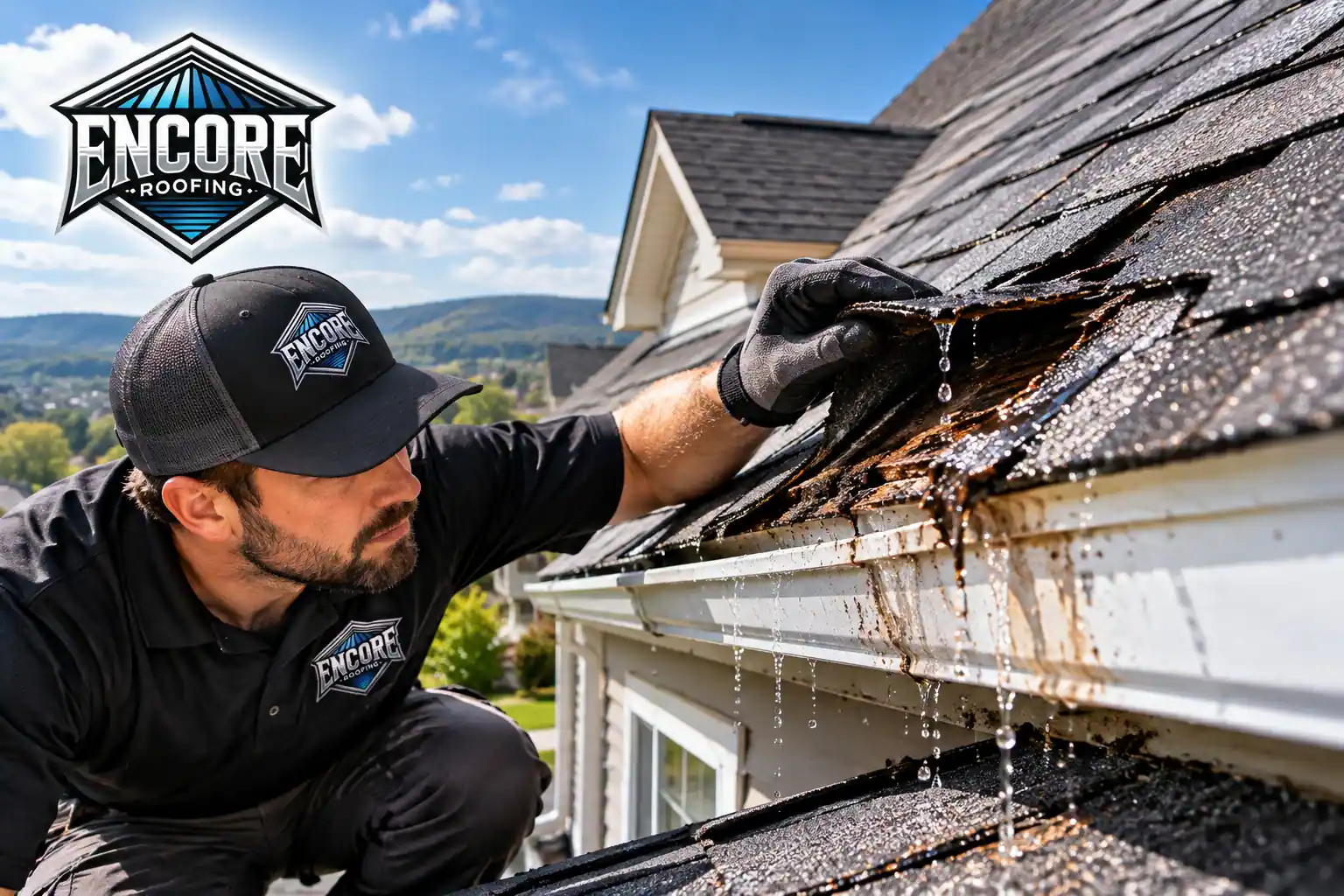
Strong gusts cause most of the trouble through wind uplift, which lifts shingle edges and breaks their seal until sections loosen or tear away. Falling branches and debris can punch straight through. Once enough material is gone, you’re looking at exposed roof decking, the wooden base of the roof. A roof leaking after a windstorm often traces back to damaged shingles or torn roofing underlayment, the water-resistant layer beneath them.
Why Exposed Roof Areas Need Attention
Water that slips past broken shingles soaks insulation and ceilings before spreading into framing and interior finishes. Anything that stays wet for long can grow mold. Roofers call this follow-on harm secondary water damage, and it can cost more than the roof fix itself.
When Does a Storm-Damaged Roof Need Emergency Tarping?
Tarping comes into play when nobody can fix a damaged area for good right now, and more weather is coming. Size, location, and severity matter more than the fact that something broke. A hole in the roof after a storm is the clearest case, whether a limb or flying debris caused it. Large patches of missing or shifted shingles also qualify, as does any spot where exposed roof sheathing shows through. An active leak calls for coverage too, because water is already inside.
The roof’s condition matters just as much as the damage itself. If rain, wind, or ice makes the surface unsafe, no crew should attempt a permanent repair. The same goes when the full assessment isn’t finished, or matching materials aren’t in stock. Roof tarping after storms gives the home temporary roof leak protection in those situations.
One missing shingle on an otherwise solid roof usually doesn’t need a tarp. A damaged roof temporary covering is for openings that can let real water in, providing temporary weatherproofing over exposed roof decking until the permanent repair is on the calendar.
When Can a Damaged Roof Be Repaired Immediately Instead of Tarped?
Not every type of storm damage calls for a roof tarp. If a qualified roofer can safely reach the spot and repair it properly the same day, a temporary cover just adds a step. Small, localized problems fit here. A roofer can often replace a few loose or torn shingles once the rain stops and the surface dries. That works when the crew has matching materials on hand and solid decking underneath. Without a significant opening letting water in, a tarp has nothing to protect.
The call rests on damage size, roof access, weather, and a contractor safety assessment. Never rush a repair just to dodge a tarp. A sloppy fix on a wet or unstable roof can fail in the next storm and put workers at risk.
Emergency Roof Tarping vs. Immediate Roof Repair: What Is the Difference?
Both approaches respond to the same storm but do different jobs, as the table below shows.
| Factor | Emergency Roof Tarping | Immediate Permanent Repair |
| Main Purpose | Temporary weather protection | Restore the damaged roofing system |
| Best Situation | Exposed or vulnerable areas that cannot be repaired immediately | Damage that can be safely and properly repaired |
| Protection | Helps limit additional water intrusion | Restores the affected roof area |
| Duration | Short-term solution | Intended as a lasting repair |
| Materials | Protective tarpaulin and appropriate securing materials | Replacement roofing materials and installation components |
| Next Step | Professional assessment and permanent restoration | Verify repair quality and address any remaining damage |
A tarp is temporary mitigation that cuts down on water entry but leaves broken shingles and torn underlayment in place. Emergency storm roof repair replaces those materials and returns the roof to working order. The two often work in sequence, with temporary roof protection going on first and permanent restoration following a full inspection.
How Does Professional Roof Tarping Help Prevent Further Water Damage?
A well-installed tarp acts like a temporary outer skin over the damaged section. It fixes nothing but keeps rain off areas that can no longer shed water. Placement does most of the work. Installers often run the protective tarpaulin up and over the ridge so rain flows off its surface instead of slipping under the top edge. Wood strips or other secure fastenings hold the edges against wind without tearing up more roofing. Coverage should reach well past the damage and follow the roof’s shape, slope, and valleys.
Good roof stabilization keeps exposure low until repairs begin, though hard wind-driven rain can still get past a tarp. Urgent roof water protection outside should pair with an attic and ceiling check for water intrusion that already happened. Preventing secondary water damage means drying out whatever got wet.
Can Emergency Roof Tarping Cause Additional Damage?
A badly installed tarp can cause fresh problems, turning the fix for one leak into the start of the next. Loose fastening is the biggest risk, because wind can get under a weak edge and turn the tarp into a sail that tugs on shingles and decking. Short coverage leaves weak spots open to rain. Fasteners driven through brittle shingles can crack more of them.
A tarp with no clear runoff path can trap water underneath. Leaving a tarp up longer than needed makes all of these problems more likely. Roofing contractors must follow OSHA fall protection rules, and a contractor safety assessment should come before anyone steps onto a damaged roof. Homeowners should stay off the roof entirely.
How Long Can a Professional Roof Tarp Remain in Place?
Tarps exist to bridge the gap between storm and repair, not to replace a roof, so no single lifespan fits every job.
Service life depends on weather exposure, wind, installation quality, and the condition of the material. Sunlight breaks down tarp material over time, and repeated gusts loosen fasteners and fray edges. A tarp that looks fine one week can shift after a single windy night.
Book permanent restoration as soon as weather and materials allow. If you notice flapping, sagging, pooled water, or new ceiling stains, have a qualified roofer check the tarp instead of climbing up yourself.
What Should Homeowners Do After Emergency Roof Tarping?
Getting the tarp on is only step one, since what happens next shapes the repair and any insurance claim.
- Arrange a professional storm damage assessment.
- Document visible roof and interior damage from safe locations.
- Contact the homeowners insurance company and ask about documentation requirements.
- Keep records of temporary protection and related expenses.
- Schedule permanent restoration after the roof can be safely repaired.
Stay off the roof the whole time. If water drips near light fixtures, outlets, or wiring, keep clear and call an electrician or your utility. The Pennsylvania Insurance Department advises documenting damage before cleanup and making temporary repairs to prevent further harm, while holding off on permanent repairs until your insurer approves them.
FAQs
When Does a Damaged Roof Need Emergency Tarping?
A roof needs a tarp when storm damage leaves an area open to rain, and a permanent repair can’t safely happen right away. Ongoing bad weather and missing materials are the usual reasons to tarp first.
Can a Roof Tarp Stop Rainwater From Entering the House?
A properly installed tarp can greatly limit how much water gets in. It can’t promise a dry house in every storm, especially during high winds or heavy sideways rain.
How Long Can a Professional Roof Tarp Remain in Place?
That depends on installation quality, weather exposure, and the tarp’s condition. Treat it as short-term protection and book the permanent repair as soon as conditions allow.
Can Temporary Roof Tarping Cause Additional Damage?
Yes, if someone installs it poorly. Weak fastening invites wind uplift, gaps in coverage leave openings, and a badly positioned tarp can hold water against the roof.
Does Homeowners Insurance Cover Temporary Roof Protection?
Coverage depends on your policy, the cause of the damage, and your insurer’s requirements. Call your insurance company, ask what it needs, and keep every photo, invoice, and receipt. This is general information, not legal advice.
Should Damaged Roofing Materials Be Repaired Before the Next Storm?
Whenever possible, a professional should assess and protect exposed or weak areas before more weather arrives. Permanent repairs can follow once the roof is safe to work on and your insurer has had a chance to inspect it.
Final Thoughts
Tarp the roof when storm damage leaves an opening and a safe, permanent fix can’t happen right away. Repair it directly when the damage is small, easy to reach, and the weather cooperates. A tarp only buys time, and it never replaces proper restoration. Encore Roofing, LLC provides storm and wind damage restoration and emergency roof repair for homeowners across Central Pennsylvania. Book a storm damage roof inspection with Encore today.