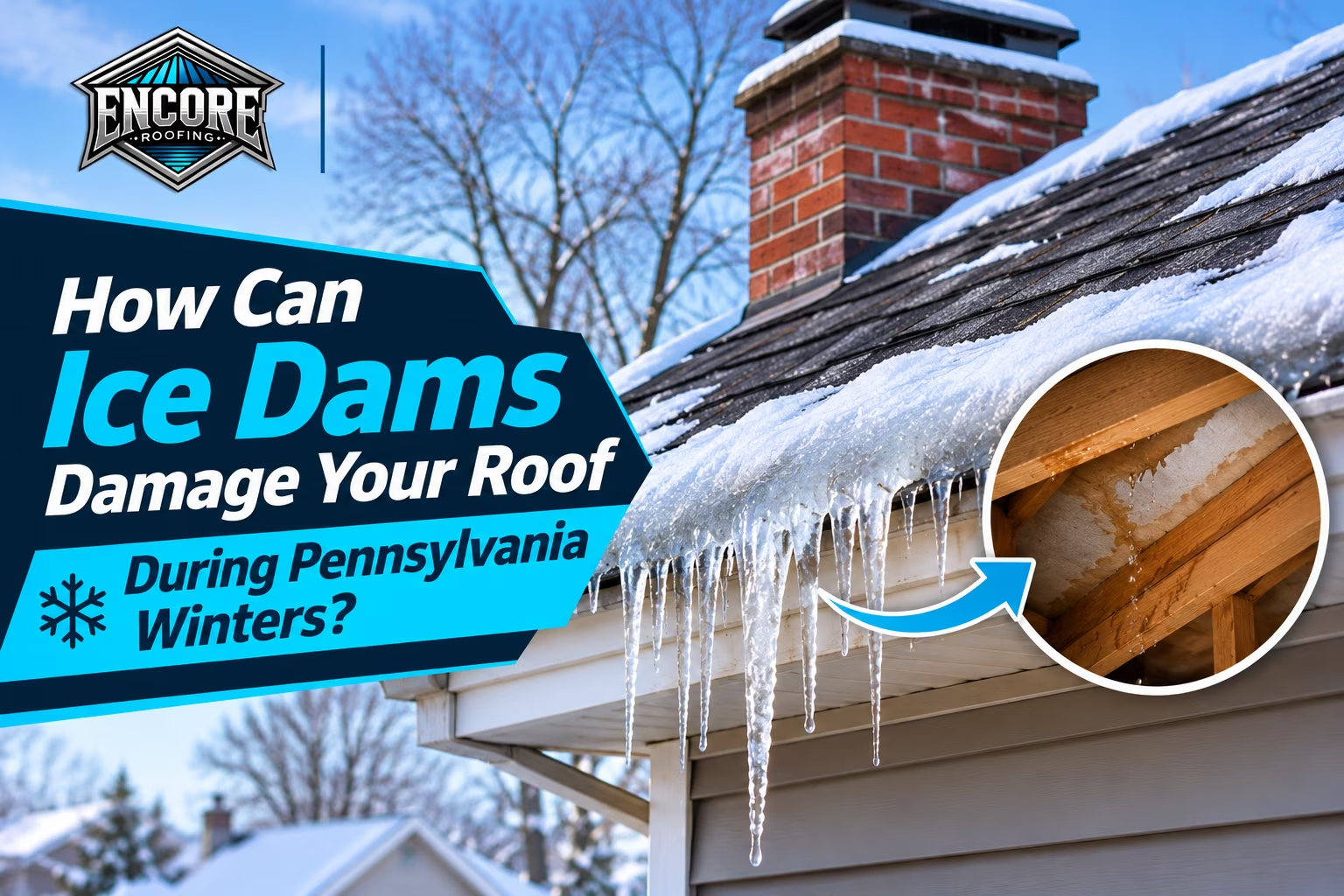
A thick ridge of ice along the gutters usually shows up a few days after a heavy snow. Heat from the house melts snow higher on the roof, and the water refreezes when it reaches the cold lower edge. That frozen ridge is an ice dam, and the ice itself is rarely the real problem. Meltwater pools behind it with nowhere to drain, so it can creep under shingles into places never built to handle standing water. Ice dam roof damage can mean loosened shingles, soaked attic insulation, deteriorating roof decking, or stained ceilings. Here’s how that damage happens and what to watch for.
How Do Ice Dams Form on Pennsylvania Roofs?
Heat escaping from your living space warms parts of the roof deck, the wooden layer under the shingles. Snow on those warm spots melts even when the air stays below freezing. The water trickles down and refreezes at the colder roof eaves, and each freeze-thaw cycle stacks more ice on the ridge. Once fresh meltwater can’t get past the ridge, it backs up and does most of the damage.
Why Do Roof Eaves Freeze Before Other Roof Areas?
The eaves hang out past your exterior walls, so no indoor heat reaches them from below. Cold air wraps around the overhang and keeps it colder than the roof above the attic.
How Do Attic Heat Loss and Poor Ventilation Contribute?
Warm air leaks into the attic around light fixtures, hatches, and plumbing vents, and thin insulation lets more heat through. Ventilation pulls cold air in low and lets warm air out near the peak, but it can’t fix a leaky attic floor alone.
What Types of Roof Damage Can Ice Dams Cause?
How much harm an ice dam does depends on how long water sits behind it, how much ice builds up, and how healthy the roof was going into winter.
Water Can Get Beneath Asphalt Shingles
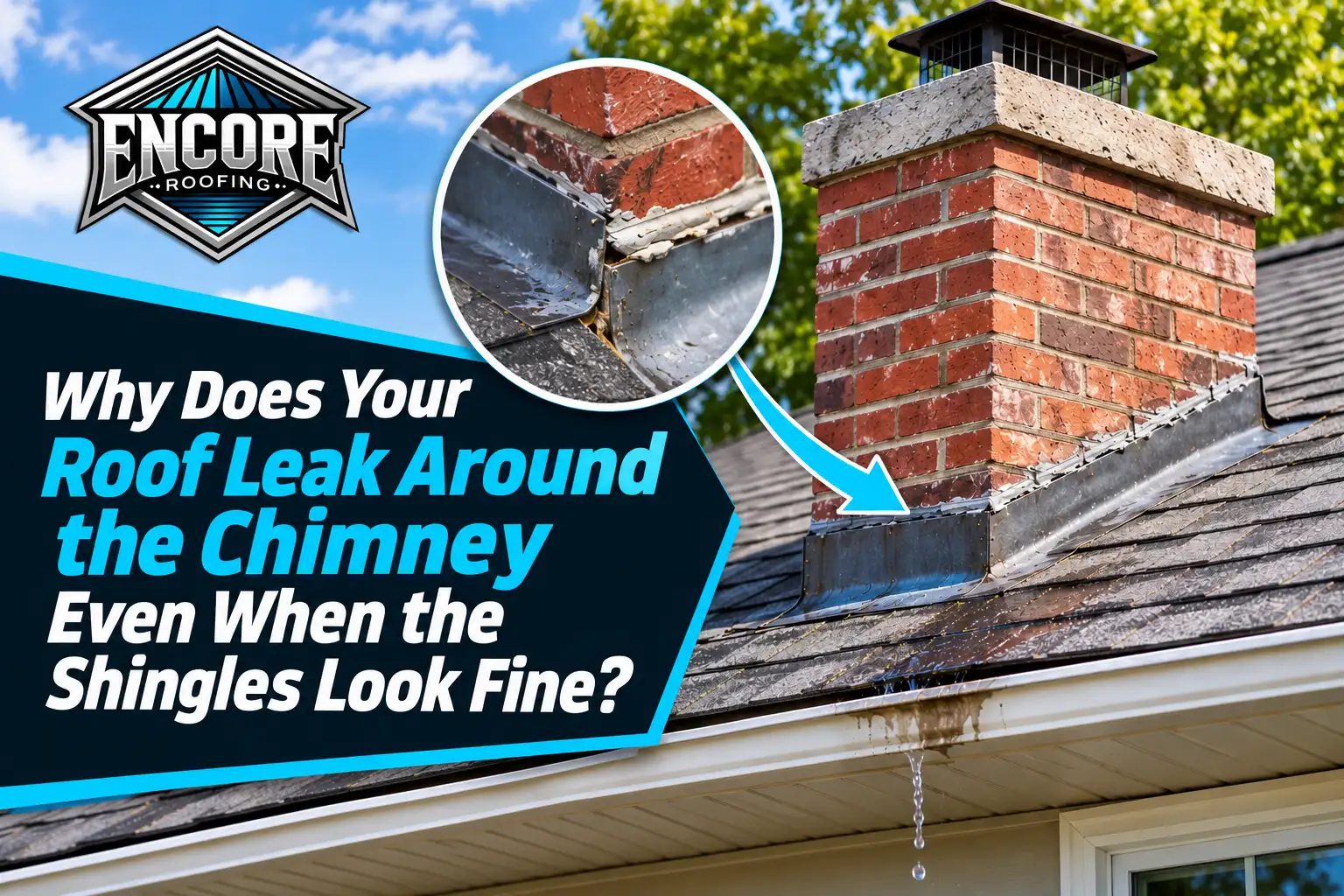
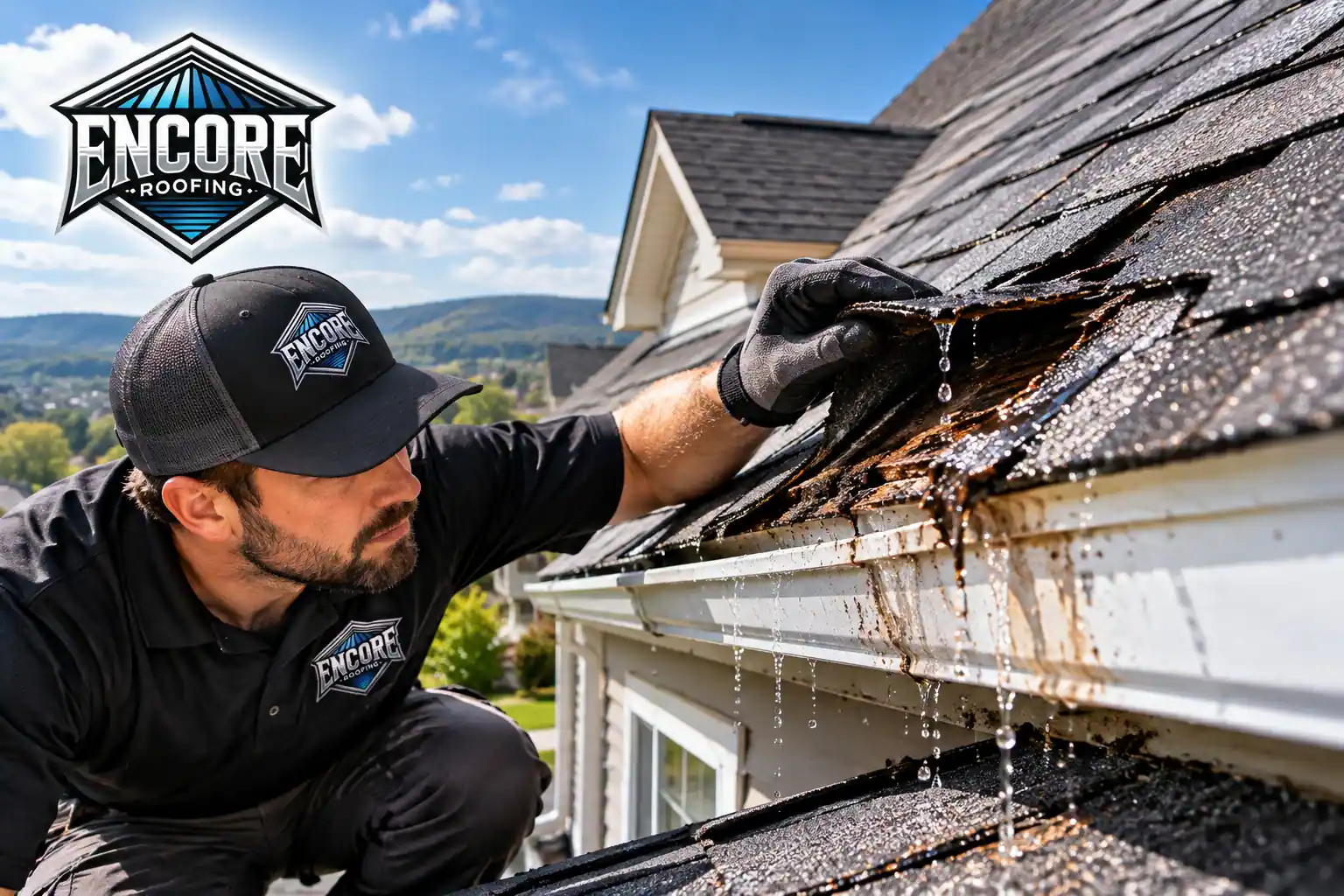
Shingles overlap so water running downhill flows over them, but standing water behind an ice dam can seep up under those overlaps or through nail holes and lifted edges. That’s how most ice dam roof leaks start, even when the shingles look fine from the ground.
Shingles Can Experience Damage Around Frozen Roof Edges
Water in small gaps expands as it freezes and pries at shingle edges a little more with each cycle. That can weaken sealant strips or lift tabs on shingles that were already brittle. Plenty of healthy roofs ride out an ice dam with no ice dam shingle damage at all.
Roof Underlayment and Decking Can Be Exposed to Moisture
Underlayment is the protective sheet between the shingles and the roof deck, and it serves as the backup layer for leaks. If it’s worn or missing near the eaves, meltwater can reach the wood decking (plywood or OSB), which swells, softens, and degrades when it stays wet. One brief ice dam rarely gets this far.
Ice Buildup Can Put Additional Stress on Gutters and Roof Edges
Ice-packed gutters carry far more weight than they’re built for, which can bend them or pull them loose. Ice frozen to the drip edge, the metal strip along the roof’s lower edge, can bend it and block drainage. These frozen roof edge problems often outlast the ice.
Here’s where the damage is likely to show up.
| Affected Area | Possible Consequence |
| Asphalt shingles | Water seepage or lifted tabs |
| Underlayment | Moisture once shingles leak |
| Roof decking | Dampness and slow deterioration |
| Gutters | Added weight and pulled fasteners |
| Roof edges | Ice accumulation and blocked drainage |
Can Ice Dams Cause Damage Inside Your Home?
Winter roof water damage doesn’t always stop at the roof. Water that gets past the shingles can soak insulation and follow rafters into ceilings and walls.
Ceiling Stains and Water-Damaged Walls
Look for brown ceiling stains after snowfall, plus peeling paint or soft drywall along exterior walls. Water leaking during snowmelt often shows up on sunny afternoons, but it can also appear days later once soaked insulation lets go.
Wet Attic Insulation and Winter Moisture Problems
Wet insulation loses much of its ability to slow heat, so more warmth reaches the roof deck and feeds the dam that soaked it. It also holds winter attic moisture against the ceiling and framing for weeks.
Roof Deck and Structural Wood Deterioration
Roof sheathing and rafters can handle an occasional damp spell, but wood that gets soaked every winter can soften and lose its grip on nails. Serious structural damage from ice dams is uncommon.
Mold and Persistent Moisture Intrusion
Mold needs moisture, food, and time. Insulation and wood that stay damp into spring can provide all three, though not every leak leads to mold. Drying wet materials quickly is the best defense against persistent moisture intrusion.
What Are the Warning Signs of Ice Dam Roof Damage?
Some clues appear outside, while others only show up indoors. Check both after snowfall, especially when National Weather Service forecasts call for daytime thaws and hard overnight freezes.
- Large icicles along gutters or heavy ice on the eaves
- A thick frozen ridge along the lower roof edge
- Water dripping inside during snowmelt
- Ceiling stains after snowfall
- Damp insulation or frost in the attic
- Peeling paint near the tops of exterior walls
- Leaks that return with each freeze-thaw swing
Icicles alone don’t prove an ice dam or roof damage, since they only show water melting and refreezing along the edge. Roof edge ice buildup paired with moisture inside is the combination worth acting on.
How Can Homeowners Reduce Ice Dam Damage During Pennsylvania Winters?
No single step guarantees a roof will never grow an ice dam. You can still reduce the conditions behind them and limit what trapped water can reach.
Address Attic Insulation and Heat Loss
Sealing air leaks around recessed lights, chimneys, and attic hatches keeps warm air off the roof deck. Adequate insulation then keeps that heat indoors. An energy auditor can recommend the right level for your home.
Maintain Clear Soffit Ventilation
Soffit vents under the roof overhang let cold air into the attic, and baffles keep insulation from blocking them. Ventilation works best alongside air sealing and insulation, not instead of them.
Understand the Role of an Ice and Water Barrier
An ice and water barrier is a self-adhering waterproof membrane that roofers install under the shingles along the eaves. It seals around nails, so backed-up water has a harder time reaching the decking. It won’t stop ice dams from forming, but it limits the damage.
Keep Gutters and Drainage Areas Maintained
Clogged gutters hold water at the roof edge, where it freezes solid. Clearing them in late fall helps meltwater drain, though clean gutters alone won’t prevent ice dams.
When Should You Schedule a Professional Roof Ice Damage Inspection?
Some damage hides under shingles or in the attic, so the ground view tells only part of the story. A roof ice damage inspection makes sense if you notice the following:
- Active leaks during snowmelt
- New ceiling stains or damp walls
- Lifted or missing shingles near the roof edge
- Wet attic insulation or damp decking
- Leaks that return winter after winter
What Should a Roofing Inspection Check?
A roofer will typically check the shingles, flashing, drip edge, and gutters before looking in the attic for wet insulation and stained decking. Confirming an ice and water barrier may require lifting shingles, and the roofer may not be able to judge some concealed areas until spring. The goal is to find out what needs repair.
| Stay Off Icy RoofsNever climb onto a frozen roof or try to chip, pry, or torch an ice dam. You could tear shingles or fall, so leave active leaks to a professional. |
FAQs
Can Ice Dams Damage Asphalt Shingles?
Yes, although water seeping under the shingles is usually a bigger concern than cracking, and repeated freezing can loosen tabs on aging shingles.
Why Does My Roof Leak When Snow Starts Melting?
Meltwater is probably trapped behind ice at the roof edge, so it backs up under the shingles toward the decking and attic.
Are Large Icicles a Sign of Roof Damage?
Not by themselves, because icicles only show melting and refreezing, while interior stains and attic moisture point to real damage.
Can Ice Dams Cause Hidden Damage Inside the Attic?
Yes, because water can soak insulation and dampen the roof deck long before a ceiling stain appears. Materials that stay wet can eventually grow mold.
Does Roof Ventilation Help Reduce Ice Dam Formation?
It helps, but not alone. Airflow evens out roof temperatures, while air sealing and insulation stop the attic heat loss that starts the melting.
When Should Ice Dam Damage Be Inspected Professionally?
Arrange an inspection for active leaks, new ceiling stains, repeat ice dams, or suspected roof or attic moisture.
Final Thoughts
Ice dams strain gutters and roof edges while pushing meltwater past shingles and underlayment until it surfaces as wet insulation or a stained ceiling. New stains, recurring leaks, and bent roof edges are worth checking before the next freeze. Looking at the roof and attic together reveals both the damage and the heat loss behind it.
Encore Roofing, LLC is based in Newport, Pennsylvania, and brings more than 30 years of roofing experience to homeowners in Perry, Dauphin, and Cumberland Counties, including Harrisburg, Mechanicsburg, and nearby Central PA communities. If you suspect ice dam roof damage, call (717) 979-1975 today to schedule an inspection or repair.