A roof is more than just shingles. A properly working roofing system includes decking, underlayment, flashing, ventilation, ridge vent, soffit intake, and quality installation. Attic ventilation is the piece homeowners tend to forget about, even though it plays a big role in how long the rest of the roof holds up.
Why Attic Ventilation Matters
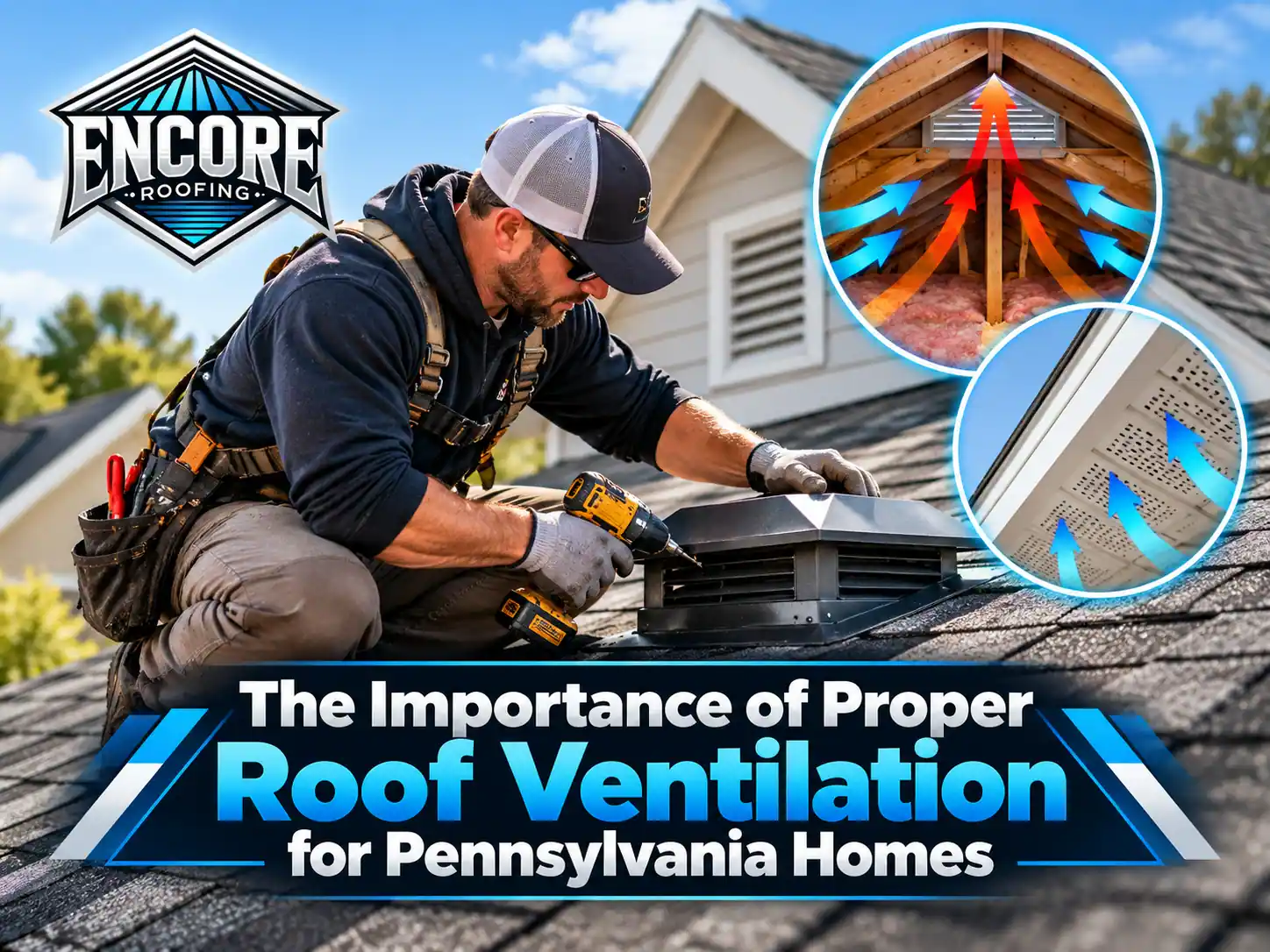
Good airflow keeps your attic from trapping too much heat or holding onto damp air. In the summer, trapped heat can build up under the roof deck, causing shingles to age faster. When cold weather sets in, an attic that can’t breathe holds onto warm, damp air. That moisture can condense on cold surfaces, encourage mold growth, and help ice dams form along the eaves.
That makes ventilation especially important in Pennsylvania, where homes face hot, humid summers, cold and snowy winters, and plenty of rain.
Good ventilation can also improve energy efficiency. When heat isn’t trapped in the attic, your cooling system may not have to work as hard during warmer months.
How a Balanced Ventilation System Works
A balanced system needs both intake and exhaust. Intake usually comes from soffit vents along the eaves, which let cooler outside air in down low. Exhaust commonly comes from a ridge vent at the peak, which lets warm, moist air escape up high. If your attic can’t breathe properly, your roof may not last as long as it should.
Under typical code requirements, every 150 square feet of attic floor needs at least 1 square foot of net free vent area. That requirement is cut in half, to 1 per 300 square feet, when intake and exhaust are evenly balanced. A roofer can calculate exactly what your attic needs.
| Expert tip: More vents aren’t always better. Mixing exhaust types, such as a ridge vent with box vents or a gable fan, can cause one vent to pull air from the other instead of from the soffits, leaving parts of the attic stagnant. Insulation pushed up against soffit vents can also block intake entirely. |
Signs of Poor Attic Ventilation
Watch for these warning signs:
- High attic temperatures
- Mold, mildew, or musty smells in the attic
- Peeling paint
- Ice buildup near roof edges
- Shingles wearing out too early
- Upstairs rooms that are hotter than the rest of the home
Ice dams usually involve both ventilation and attic insulation, so a good inspection checks both. It’s also worth confirming that bathroom and kitchen exhaust fans vent outside. Fans that vent into the attic are a common, easily fixed source of moisture problems.
Why Ventilation Matters During a Roof Replacement
When Encore Roofing replaces a roof, we look at the entire roofing system, not just the shingles. If ventilation needs to be improved, we’ll explain the options clearly. Installing quality ridge vent and making sure there’s proper intake can help protect your new roof investment.
Ventilation can protect your warranty, too. Shingle warranties often come with ventilation requirements, so an attic that falls short of them could put your coverage at risk.
Roof Ventilation Services in Mechanicsburg, Harrisburg and Perry County
Encore Roofing provides roof replacement, roof repairs, ridge vent installation, and residential roofing services throughout Mechanicsburg, Harrisburg, Camp Hill, Carlisle, Perry County, and all surrounding areas.
If you’re planning a roof replacement, don’t overlook ventilation. Call Encore Roofing at 717-979-1975 to schedule an inspection.