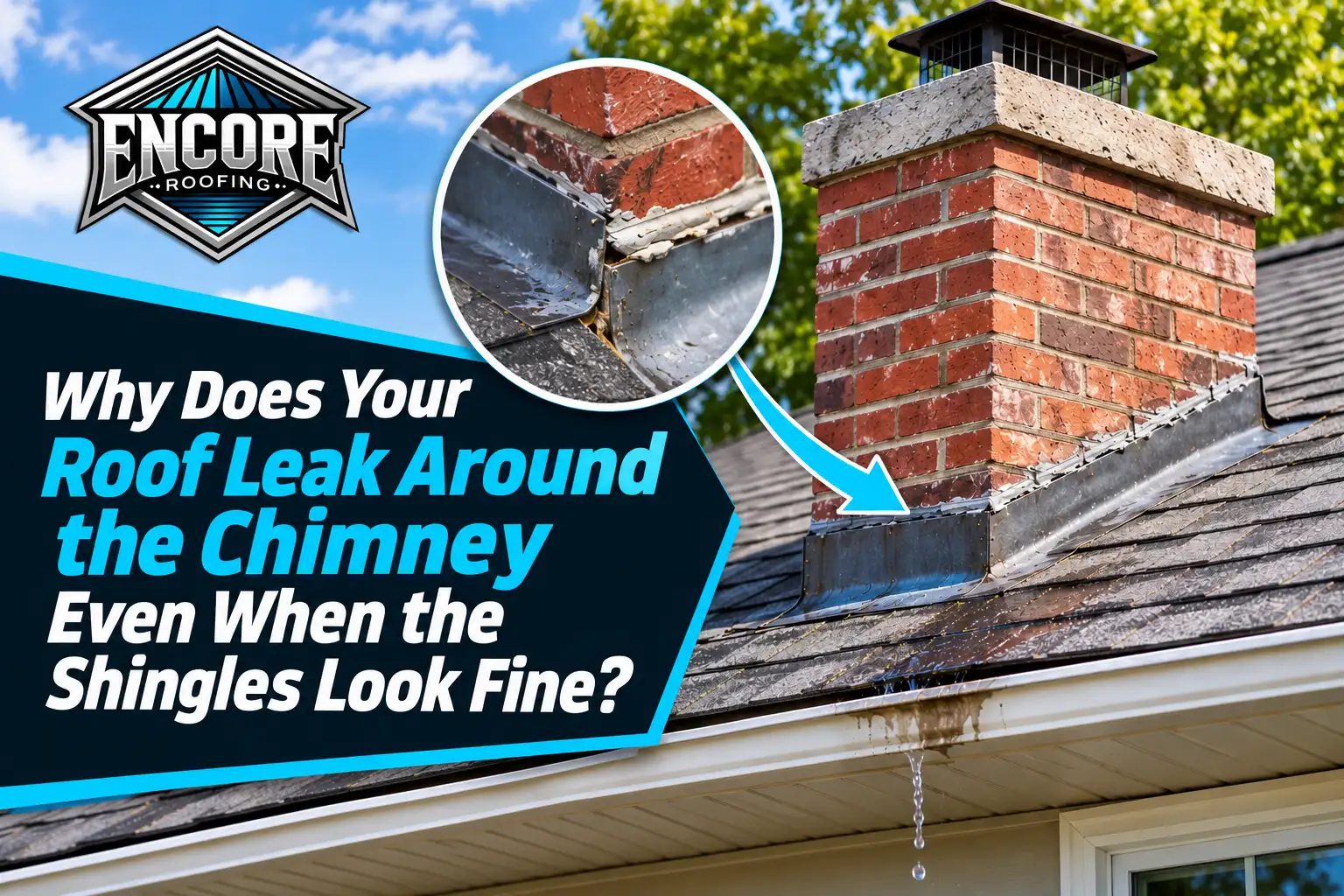
After heavy rain, you spot a brown stain on the ceiling close to the chimney. You may also notice water dripping near the fireplace. From the yard, the shingles look flat and undamaged. Here’s the catch. The chimney extends through the roof deck, and the connection between the chimney and the roof deck is made with metal flashing and sound masonry. In this article, we will discuss chimney flashing roof repair: why it is happening, how to find it, and how to repair it.
Why Does a Roof Leak Around the Chimney Even When Shingles Are Intact?
Shingles and flashing perform different tasks. Shingles are laid in an overlapping pattern like fish scales, which directs rain towards the gutters. They can’t seal against a brick wall. Shingles cannot bend upward to seal against a vertical surface like a chimney. The chimney will require its own set of bent metal pieces, known as flashing, to cover the area where the roof is joined to the brick.
If one piece slips or lifts, then water runs behind it. It never comes in contact with shingles. Wind can worsen this, forcing water across the gap that would otherwise roll past. A roof can appear to be ideal and then fail to prevent a storm from entering through the chimney joint.
Once water infiltrates, it rarely falls straight; it usually drains and pools, following trails along the roof deck to a low point. This means the water may be leaking in from a single place, but the leak is a few feet away, leaving a stain.The stain doesn’t necessarily show where the water entered.
What Chimney Flashing Issues Can Cause Roof Leaks?
Chimney flashing is a group of overlapping metal components. They work as a team. One weak spot breaks the chain, and water finds it fast. They each have their own pattern of failure, and it’s best to learn to treat them individually. Here are the 4 that cause the most trouble.
Separated or Poorly Installed Step Flashing
Step flashing consists of small L-shaped metal pieces placed along the sides of the chimney. One piece tucks into each course of shingles. A missing piece lets water slip underneath. So does one lap the wrong way. The visible shingles can remain in good condition despite the flashing problem. Bad installation hides well.
Loose or Damaged Counter Flashing
The second metal layer is known as counter flashing. The upper edge is set in a cut mortared joint, and the bottom edge is over the step flashing. When the mortar cracks, or the metal pulls free, water runs behind the entire system. This is frequently not seen on the ground due to the small size of the gap.
Rusted Metal and Failed Flashing Sealant
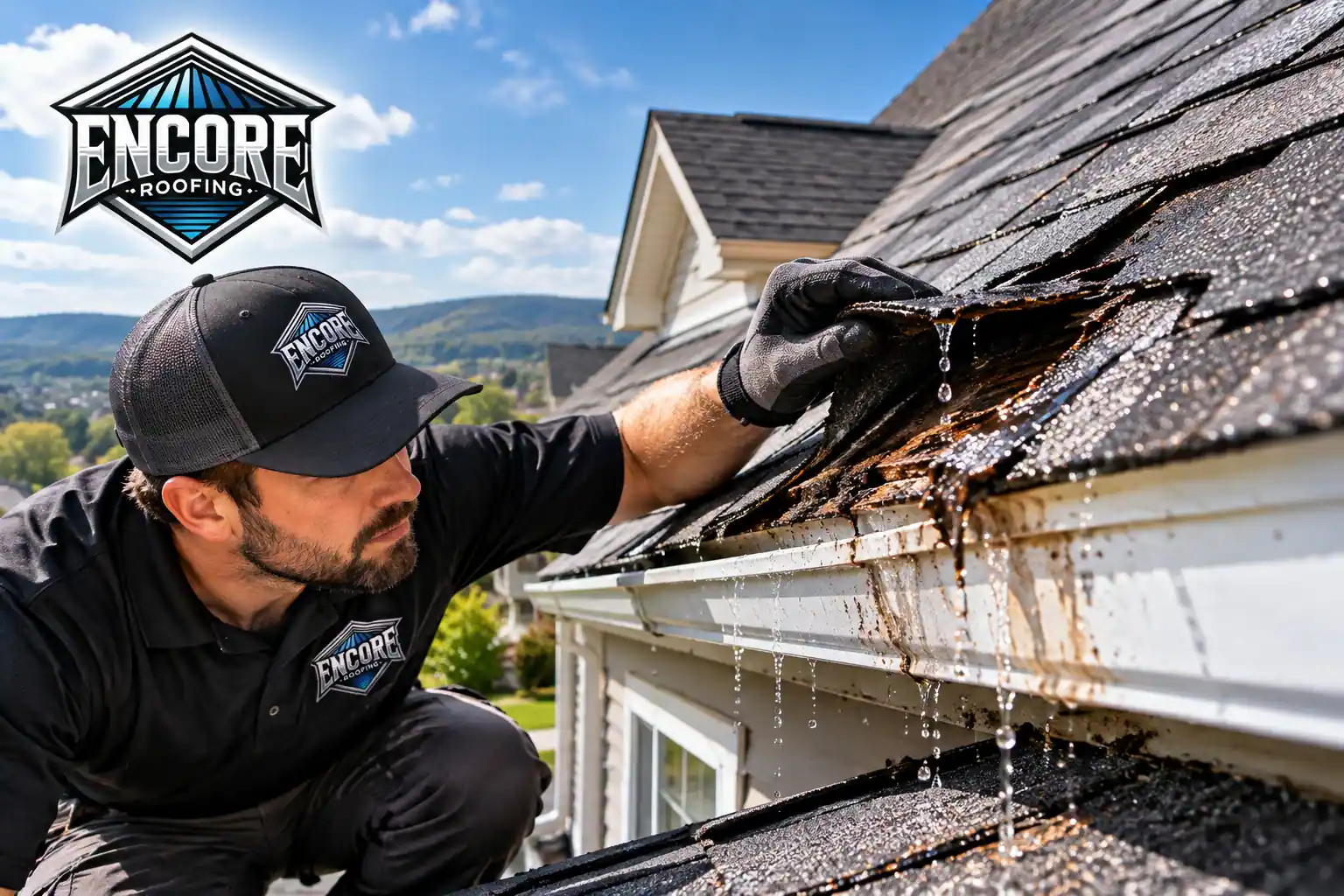
Metal flashing thins out over the years. Tiny holes form. Sealant wears out even faster, since sun and cold crack it and pull it off the brick. A fresh bead of caulk might quiet a drip for a season. It can’t fix rotted metal or pieces that overlap backward.
Missing or Damaged Chimney Cricket
A small, sloped roof structure called a chimney cricket sits on the uphill side of the chimney. The cricket helps water flow around the chimney instead of collecting behind it. Without one, rainwater and melting snow can build up on the uphill side. Recent editions of the International Residential Code (IRC) call for a cricket when a chimney is wider than 30 inches parallel to the ridge and doesn’t reach the ridge. Local codes vary. Narrow chimneys often use a metal back pan instead.
Could the Leak Come From the Chimney Masonry Instead of the Flashing?
Sometimes the flashing is fine. The chimney itself lets water in. Brick and mortar look solid, but they soak up water like a hard sponge. Deteriorated mortar is a common culprit. Central Pennsylvania’s freeze-and-thaw winters crack those joints faster than mild climates do. Water then travels down inside the chimney.
Porous brick can do the same thing. A damaged crown or missing chimney cap can let rainwater into the chimney. By contrast, failed flashing allows water to enter where the chimney meets the roof. A masonry leak comes through the chimney itself, sometimes well above the roof. Repointing brick or rebuilding a crown may call for a qualified mason instead of a roofer.
What Are the Warning Signs of a Roof Leak Around the Chimney?
Most homeowners notice trouble indoors first. Watch for these clues:
- A ceiling stain near the chimney that grows after storms
- Water leaking beside the fireplace or onto the hearth
- Damp spots on walls next to the chimney
- Recurring moisture after heavy or wind-driven rain
- Peeling paint or sagging ceiling material
- Rust, lifted metal, or gaps around the flashing
- Crumbling mortar near the roofline
- Water stains or damp insulation in the attic
These signs point to moisture intrusion. None of them confirms where the water gets in. Check the flashing from the yard with binoculars. Skip the climb onto the roof. Wet shingles are slick, and a fall does far more harm than any leak.
How Can a Roofer Find the Actual Source of a Chimney Leak?
Good chimney roof leak detection comes before any repair. A wrong guess means you pay for a fix and still hear drips in the next storm.
- Review the interior signs: The roofer studies stains and damp spots and asks when the leak shows up.
- Inspect the attic where accessible: Water trails, dark wood, and wet insulation often point toward the entry area.
- Examine the exterior flashing: The roofer checks the step flashing, counter flashing, metal, joints, and sealant.
- Check the chimney masonry: Cracked mortar and crown damage go on the list of possible entry points.
- Evaluate water drainage: The roofer checks whether a cricket or back pan sheds water off the uphill side.
The goal is to separate a flashing failure from masonry damage. A nearby defect, like a cracked vent boot, can fool everyone. A leak that only shows up in certain weather may take a second visit. Sometimes the roofer runs a controlled water test to pin it down.
What Does Chimney Flashing Roof Repair Usually Involve?
The correct repairs will depend on what went wrong. It also relies on the extent of the damage. A roofer considers the extent of the damage before making a decision on choosing a fix. Little jobs remain little. The larger ones require a greater amount of opening of the roof. Little jobs remain little. The larger ones require a greater amount of opening of the roof. The work is typically divided up like this.
Repairing Minor Flashing Separation
A roofing contractor can reattach the loose counter flashing on a small, local project. Or substitute one short part. This only works if the layers below still match up properly. The metal should also need to be solid. It’s the same as a patch, just postponing the next leak if either one fails the check.
Replacing Damaged Chimney Flashing
Rusted or badly installed metal usually has to come out. Step flashing and counter flashing work as a pair, so a roofer often replaces both at once. Reaching the step flashing means lifting or removing the shingles along the chimney. That also lets the roofer check the deck and underlayment for rot.
Addressing Masonry and Drainage Problems
A mason should fix deteriorated mortar before new counter flashing goes in. The metal needs solid joints to grip. The roofer may then reset the flashing. Where a cricket is missing, the roofer can build one. Crown and cap repairs often go to a chimney contractor.
Can Chimney Flashing Be Repaired Without Replacing the Entire Roof?
Yes, in many cases. A chimney leak is a local problem. It usually calls for a local repair around the chimney and a few nearby shingles. The job gets bigger when water has rotted the decking or soaked the underlayment. Even then, a chimney leak alone isn’t a reason to replace the whole roof. Let the real condition of the flashing and the roof around it set the size of the job.
Frequently Asked Questions
Here are quick answers to common questions about chimney leaks.
Why does my roof leak only during heavy rain?
Heavy or wind-driven rain throws far more water at the chimney than a light shower does. That flow hits any small flashing gap hard. It can also back up behind the chimney. Either way, some of it gets through. A light drizzle may never reach the weak spot at all.
How can I tell whether chimney flashing is damaged?
From the ground, scan for lifted or missing metal. Look at the mortar joints too. Rust and visible separation matter as well. Moisture that keeps returning inside near the chimney is another clue. Still, only a proper inspection confirms the cause. Binoculars help you spot trouble from the yard.
Can chimney flashing be repaired without replacing the entire roof?
Often, yes, as long as the surrounding roof is still in good shape. The roofer replaces the failed flashing. A few nearby shingles get replaced too. The rest of the roof stays untouched. Your roof’s age and condition still shape the final answer, so a close look matters.
Why does chimney flashing continue leaking after sealing?
Sealant can hide a visible gap on leaking chimney flashing without fixing what’s behind it. Pieces that overlap backward keep letting water in. So does rusted metal. Loose counter flashing and cracked masonry do the same. All of that sits under the fresh caulk, and the drip returns.
Can damaged chimney flashing cause attic water damage?
Yes. Damaged chimney flashing can let water soak the roof decking. Insulation and framing get wet next. That roof flashing water damage often spreads before anyone notices it. By then, rot may already have started. Catching a leak early keeps the repair small.
When should I call a roofer about chimney leaks?
Call when a leak keeps returning. Call when a fresh stain appears. Call if you see damaged flashing. Damp wood or wet insulation in the attic is another reason. Don’t wait for the next storm to confirm it. A quick inspection beats repairing a rotted deck later.
Final Thoughts
Your shingles can look great while the chimney flashing underneath has failed. Bad mortar can also let water in. So can rusted metal or poor drainage. Find the real entry point before choosing a repair. More sealant on a visible gap rarely fixes a deeper problem. Good roof chimney leak repair starts with an inspection, ideally before moisture reaches the roof deck or your ceiling.
Encore Roofing, LLC offers roof inspection and repair services for homeowners in Harrisburg, Mechanicsburg, Newport, and throughout Dauphin, Cumberland, and Perry counties in Central Pennsylvania. Their repair work covers roof leaks and damaged flashing. If water keeps showing up near your chimney, call Encore Roofing, LLC at (717) 979-1975 to talk through the problem and schedule an inspection.